Showing posts with label Development. Show all posts

Tuesday, 12 November 2024

Public Consultation - Villa Rosa: MSA calls for Social Impact Assessment

The Malta Sociological Association (MSA) notes the public consultation for the Partial Review of the 2006 North Harbours Local Plan for Paceville (Villa Rosa site). It welcomes the point that the review must align with the principles of sustainable development by balancing economic growth with environmental protection and social responsibility. 

To this end, the MSA proposes an additional objective, namely to ensure that development does not create negative social impacts on the community. In order to achieve this objective (and in line with objective 6), the MSA proposes the adoption of a Social Impact Assessment (SIA) that follows a comprehensive and scientific approach in conformity with the International Principles for Social Impact Assessment. 

The International Association for Impact Assessment defines SIA as being “the processes of analysing, monitoring and managing the intended and unintended social consequences, both positive and negative, of planned interventions (policies, programs, plans, projects) and any social change processes invoked by those interventions”. An SIA is an interdisciplinary process, and follows established social-scientific methods, both quantitative and qualitative. Social impact assessments should not be one-off exercises, but ongoing processes which engage with various stakeholders and which report back so as to ensure effective policy processes.


Friday, 11 October 2024

Children Envision Ideal Coastal Village at Malta Sociological Association’s Stand During Science in the City Festival

Valletta, 28th September – "I want to live close to the sea, with plenty of space and greenery close by." This was one of the many voices heard at the Malta Sociological Association’s (MSA) interactive stand, held in collaboration with the University of Malta during Science in the City, where children participated in designing their ideal village by the sea in Malta.  

Participants, mostly children, were invited to construct their ideal coastal community using building models on a table stand. The flexible setup included models representing key community structures like houses, places of worship, health centres, schools, residential areas, shops, supermarkets, hotels, and more. The activity allowed participants to express their vision of what an ideal living space in Malta would look like.

Some of the comments shared by the children during the activity included:

  • “We don’t need another supermarket.”
  • “I would encourage people to use bicycles as a method of transport.”
  • “In front of the sea, floors should be recessed so more people can enjoy the Seaview.”

Facilitated by sociologists from the MSA, the activity

was a platform for exploring the ideas behind the children’s decisions, while emphasising the importance of conducting a social impact assessment at the early stages of any project. Such assessments ensure that new developments foster a sense of belonging and meet the needs of the communities that will use them.

The simple yet thought-provoking exercise sparked meaningful conversations not only among children but also with their grown-up family members. The activity successfully guided participants through the urban planning process, encouraging them to reflect on the social impact of their decisions.

Participants delved into the importance of building diverse, inclusive, and equitable communities, aligning with the festival’s theme of Justice, Equity, Diversity, and Inclusion (J.E.D.I.).

The Malta Sociological Association’s initiative demonstrated how even in its simplest form, engaging citizens, especially younger generations, in planning processes can foster better-designed spaces that promote well-being, environmental sustainability, and a sense of community.

For more information, please contact:
Bridget Borg Chairperson Malta Sociological Association

 chairperson.maltasociological@gmail.com


Tuesday, 19 December 2023

"Ħal Far Local Plan review should include Social Impact Assessment" - Malta Sociological Association

The Malta Sociological Association notes that the Planning Authority has been asked by the Government to commence a partial review of the 2006 South Malta Local Plan, as amended in 2017, specifically for Hal Far. In this regard, we are calling for the employment and mainstreaming of social impact assessments in this process. SIAs should not be one-off exercises. Instead, SIAs should be carried out through ongoing processes, conforming to professional guidelines, such as those of the International Association for Impact Assessment.


Image: Planning Authority


Monday, 2 October 2023

Townsquare - Sociologists request social impact assessment

With reference to the latest development proposals at the Townsquare site in Sliema, the Malta Sociological Association is requesting EIA Malta to commission an ongoing social impact assessment. Previous versions of this project, including the one that was approved by the Planning Authority in 2019, had corresponding social impact assessments, but the plans have changed yet again, as per application GF 00150/06 (ERA) and 01398/23 (PA), which refers to an 

"increase in number of apartments from 159 to 234; reconfiguration of parking levels to increase number of parking spaces from 600+ to 850+; introduction of a green parking area for alternative mode of transport including cycling, scooteris, and taxis; removal of vehicular access to the car park from Hughes Hallet street level; introduction of hotel (Class 3B) to also serve apartments (Class 1); addition of amenities level within double height level in tower; removal of the Pavilion building; introduction of office levels within double height areas in lower buildings; internal reconfiguration of office and retail areas; change of use of some Class 4C outlets to Class 4D.

As per Malta's national census (2021), Sliema is now Malta's most densely populated locality.  Various social characteristics of Sliema have changed since the approval of the previous version of the Townsquare project. These need to be analysed scientifically through social impact assessment in an ongoing process, and in conformity to guidelines such as those of the International Association for Impact Assessment. 

Image: MaltaToday


Tuesday, 31 January 2023

St Albert College: MSA calls for Social Impact Assessment

Kindly find below feedback of the Malta Sociological Association to the Environment and Resources Authority (ERA), calling for an ongoing Social Impact Assessment in response to the call for consultation regarding the construction of St Albert the Great Community College.

-----

With reference to the consultation PA 01123/20 (EA 00021/20), and which may be accessed through this link, the Malta Sociological Association (registered VO 1323) proposes that the Environment Impact Assessment includes a Social Impact Assessment as an ongoing process.


The International Principles for Social Impact Assessment defines SIA as being “the processes of analysing, monitoring and managing the intended and unintended social consequences, both positive and negative, of planned interventions (policies, programs, plans, projects) and any social change processes invoked by those interventions”.


An SIA is an interdisciplinary process, and should employ various methods, both quantitative and qualitative. Social impact assessments should not be one-off exercises: To the contrary, they should be ongoing processes which engage with various stakeholders and which report back so as to ensure effective policy processes.


In this regard, you may refer to international SIA standards, for example those set by the International Association for Impact Assessment, which is accessible from this link:


https://www.socialimpactassessment.com/documents/IAIA%202015%20Social%20Impact%20Assessment%20guidance%20document.pdf  


Reference: Frank Vanclay (2003) International Principles For Social Impact Assessment, Impact Assessment and Project Appraisal, 21:1, 5-a12, DOI: 10.3152/147154603781766491

Wednesday, 4 January 2023

"Chalet and Qawra sites require Social Impact Assessment" Malta Sociological Association

The Malta Sociological Association (MSA) has called for social impact assessments in relation to Government's proposal to declassify three public properties from the public domain. 

In its feedback to the Planning Authority, MSA said that the entire policy process in question should employ social impact assessments, in an ongoing process.

"Hence, Social Impact Assessments should be conducted with regard to the following
public properties, which are being proposed by Government for declassification from
the Public Domain to serve both private and public interests:
1. Chalet, Triq it-Torri, Sliema
2. Triq Dawret il-Qawra, Bugibba l/o St.Paul’s Bay (Site A)
3. Triq Dawret il-Qawra, Bugibba l/o St.Paul’s Bay (Site D)"

The MSA referred to the International Principles for Social Impact Assessment, established by the International Association for Impact Assessment, and emphasized that such studies should be ongoing processes with constant engagement with stakeholders, rather than one-off exercises. 

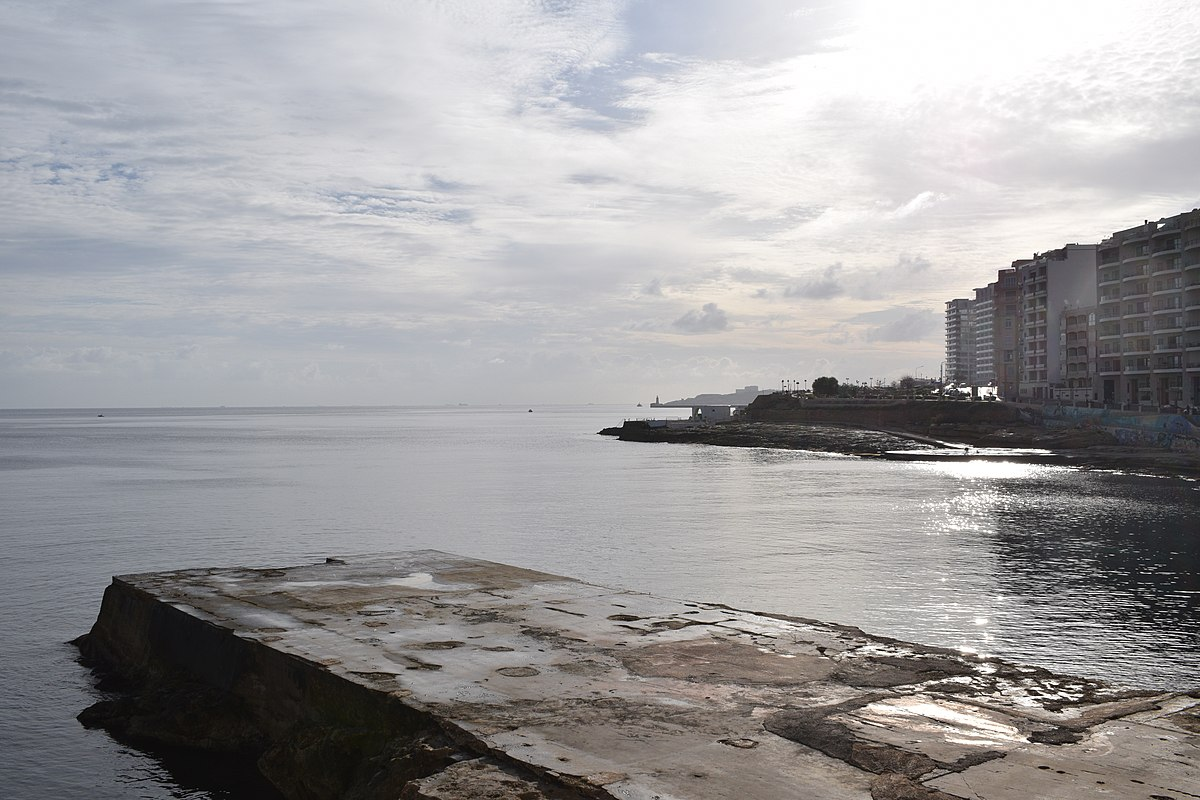
Image:  © Enrique Íñiguez Rodríguez (CC-BY-SA)


Tuesday, 22 November 2022

Press Release : Malta Sociological Association on the Amendments to the Regularisation of Existing Development Regulations

With reference to the consultation in question (link to call for consultation), the Malta Sociological Association (registered VO 1323) proposes that the entire policy  process employs social impact assessments in an ongoing process.


The International Principles for Social Impact Assessment defines SIA as being “the processes of analysing, monitoring and managing the intended and unintended social consequences, both positive and negative, of planned interventions (policies, programs, plans, projects) and any social change processes invoked by those interventions”.


An SIA is an interdisciplinary process, and should employ various methods, both quantitative and qualitativeSocial impact assessments should not be one-off exercises: To the contrary, they should be ongoing processes which engage with various stakeholders and which report back so as to ensure effective policy processes.
 

In this regard, you may refer to international SIA standards, for example those set by the International Association for Impact Assessment, which is accessible from this link:


https://www.socialimpactassessment.com/documents/IAIA%202015%20Social%20Impact%20Assessment%20guidance%20document.pdf  


Reference: Frank Vanclay (2003) International Principles For Social Impact Assessment, Impact Assessment and Project Appraisal, 21:1, 5-a12, DOI: 10.3152/147154603781766491